Beginning in late July, NIH will start introducing a new website experience designed to make it easier to find health information, research, funding opportunities, and other resources. During the transition, you may notice changes to navigation, page layouts, and where some information is located.
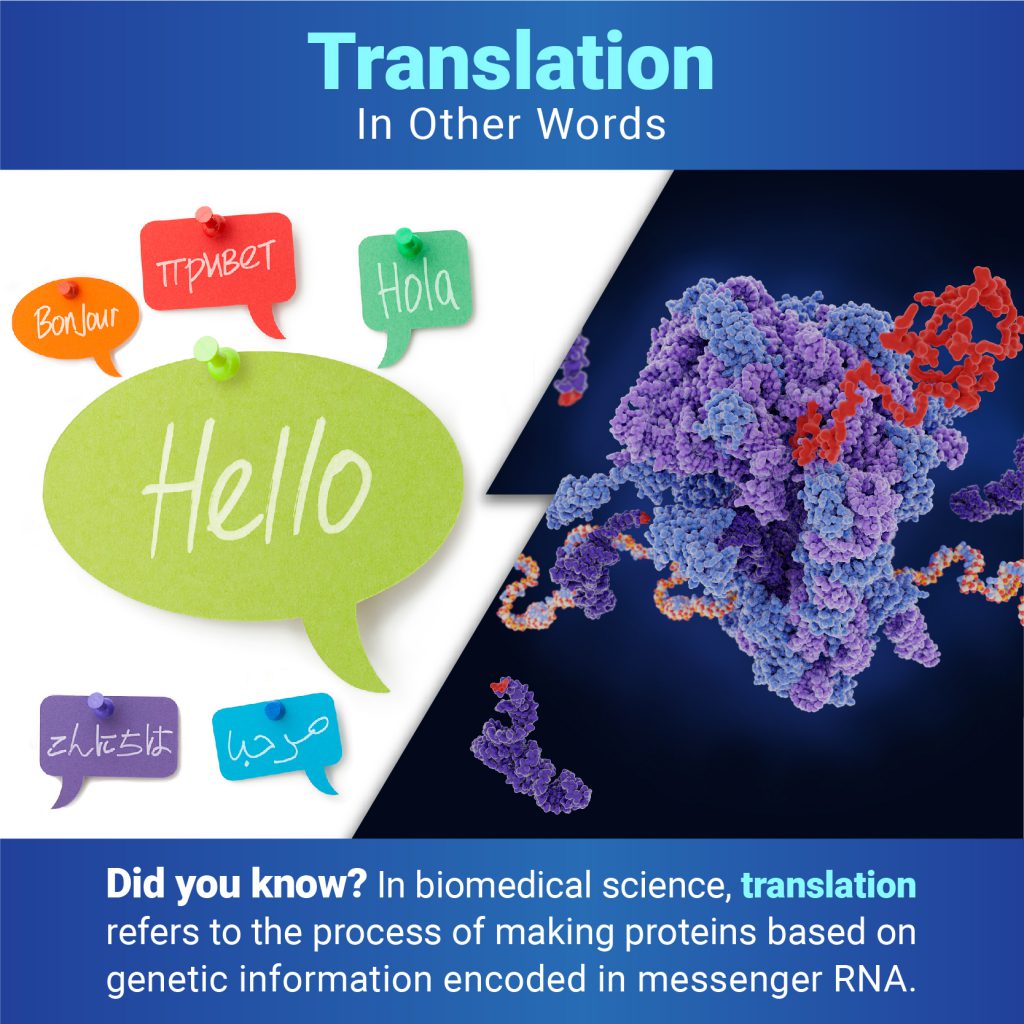
In everyday use, most people understand translation to mean converting words from one language to another. But when biologists talk about translation, they mean the process of making proteins based on the genetic information encoded in messenger RNA (mRNA). Proteins are essential for virtually every process in our bodies, from transporting oxygen to defending against infection, so translation is vital for keeping us alive and healthy.
Apoptosis is the process by which cells in the body die in a controlled and predictable way because they have DNA damage or are no longer needed. The term comes from a Greek word meaning “falling off,” as in leaves falling from a tree.
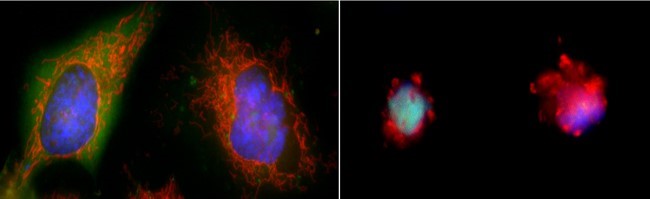
When a cell undergoes apoptosis, it shrinks and pulls away from its neighbors. As the cytoskeleton that gives it shape and structure collapses, the envelope around the cell’s nucleus breaks down, and its DNA breaks into pieces. Its surface changes, signaling its death to other cells and leading a healthy cell to engulf the dying one and recycle its components.
Two cells in a healthy state (left) and entering apoptosis (right). Credit: Hogan Tang of the Denise Montell Lab, Johns Hopkins School of Medicine.
 National Institute of