Alisa Zapp Machalek

Originally trained in biochemistry, Alisa wrote about the full range of NIGMS-supported research before transferring to the National Institute of Arthritis and Musculoskeletal and Skin Diseases in April 2020. She managed the NIGMS image and video gallery, and helped foster science education at NIH.
Email
36@nigms.nih.gov
First Name
Alisa
Image
Last Name
Machalek
machine_name
alisa-zapp-machalek

Science Snippet: Learn About the Cytoskeleton

May 12, 2021

The cytoskeleton is a collection of fibers that gives shape and support to cells, like the skeleton does for our bodies. It also allows movement within the cell and, in some cases, by the entire cell. Three different types of fibers make up the cytoskeleton: actin filaments, intermediate filaments, and microtubules.

Powering Muscles

Actin filaments contract or lengthen to give cells the flexibility to move and change shape. Along with the protein myosin, they’re responsible for muscle contraction, including voluntary movement and involuntary muscle contractions, such as our heartbeats. Actin filaments are the thinnest and most brittle of the cytoskeletal fibers, but they’re also the most versatile in terms of shape.

Continue Reading

Take a Tour of Your Cells’ Organelles!

March 17, 2021
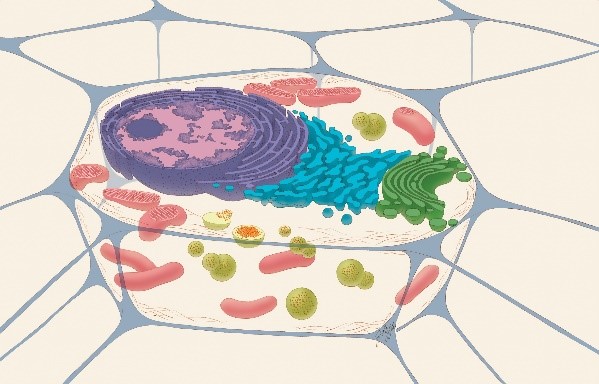
An illustration of a cell cut in half, showing many different structures. A cross-section of a cell showing organelles. Credit: Judith Stoffer.

Welcome to our tour of the cell! Imagine you’ve shrunk down to about 3 millionths of your normal size. You are now about 0.5 micrometers tall (a micrometer is 1/1,000th of a millimeter). At this scale, a medium-sized human cell looks as long, high, and wide as a football field. But you can’t see nearly that far. Clogging your view is a rich stew of molecules, fibers, and various cell structures called organelles. Like the internal organs in your body, organelles in the cell each have a unique biological role to play.

The Nucleus and Its Closest Neighbor

Our first stop is the somewhat spherical structure about 50 feet in diameter. It’s the nucleus—basically the cell’s brain. The nucleus is the most prominent organelle and can occupy up to 10 percent of the space inside a cell. It contains the equivalent of the cell’s genetic material, or DNA.

Continue Reading

Archived: Block an Enzyme, Save a Life

November 26, 2019
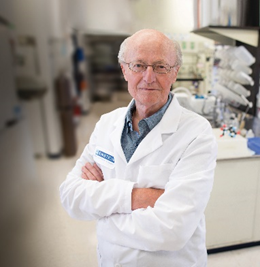
Vern Schramm in his lab, dressed in a white lab coat, standing with his arms folded across his chest. Vern Schramm, professor of biochemistry at Albert Einstein College of Medicine, Bronx, New York. Credit: Albert Einstein College of Medicine.

Enzymes drive life. Without them, we couldn’t properly digest food, make brain chemicals, move—or complete myriad other vital tasks. Unfortunately, in certain cases, enzymes also can trigger a host of health problems, including cancer, bacterial infections, and hypertension (high blood pressure).

Understanding how enzymes work has been the research focus of Vern Schramm for more than 4 decades.

“When we started our work, we were driven not by the desire to find drugs, but to understand the nature of enzymes, which are critical to human life,” Schramm says. But his research already led to one drug, and promises many more.

Continue Reading

Archived: RNA Polymerase: A Target for New Antibiotic Drugs?

August 7, 2019

DNA, with its double-helix shape, is the stuff of genes. But genes themselves are only “recipes” for protein molecules, which are molecules that do the real heavy lifting (or do much of the work) inside cells.

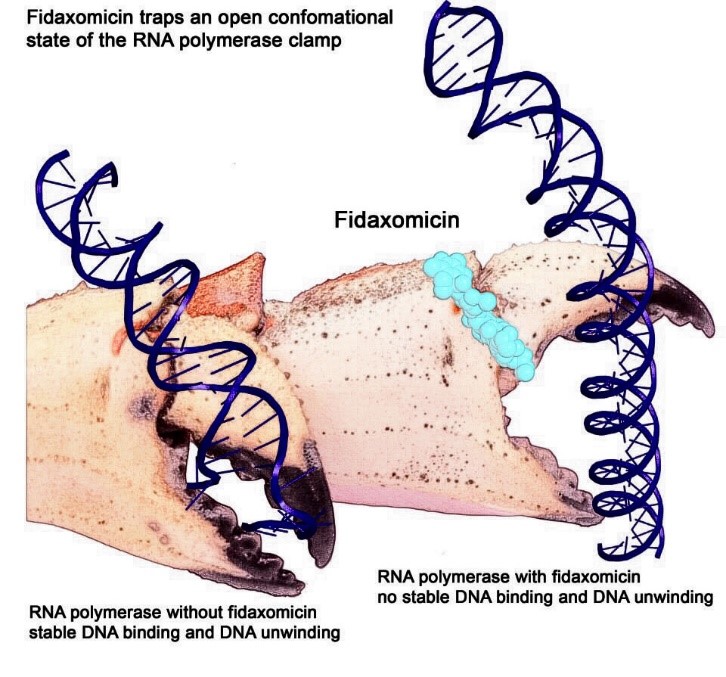
RNAP illustrated as a crab claw, clamping on a DNA double helix. Artist interpretation of RNAP grasping and unwinding a DNA double helix. Credit: Wei Lin and Richard H. Ebright.

Here’s how it works. A molecular machine called RNA polymerase (RNAP) travels along DNA to find a place where a gene begins. RNAP uses a crab-claw-like structure to grasp and unwind the DNA double helix at that spot. RNAP then copies (“transcribes”) the gene into messenger RNA (mRNA), a molecule similar to DNA.

The mRNA molecule travels to one of the cell’s many protein-making factories (ribosomes), which use the mRNA message as instructions for making a specific protein.

Continue Reading

Archived: Amazing Organisms and the Lessons They Can Teach Us

May 15, 2019

What do you have in common with rodents, birds, and reptiles? A lot more than you might think. These creatures have organs and body systems very similar to our own: a skeleton, digestive tract, brain, nervous system, heart, network of blood vessels, and more. Even so-called “simple” organisms such as insects and worms use essentially the same genetic and molecular pathways we do. Studying these organisms provides a deeper understanding of human biology in health and disease, and makes possible new ways to prevent, diagnose, and treat a wide range of conditions.

Historically, scientists have relied on a few key organisms, including bacteria, fruit flies, rats, and mice, to study the basic life processes that run bodily functions. In recent years, scientists have begun to add other organisms to their toolkits. Many of these newer research organisms are particularly well suited for a specific type of investigation. For example, the small, freshwater zebrafish grows quickly and has transparent embryos and see-through eggs, making it ideal for examining how organs develop. Organisms such as flatworms, salamanders, and sea urchins can regrow whole limbs, suggesting they hold clues about how to improve wound healing and tissue regeneration in humans.

Continue Reading

Archived: Five Fabulous Fats

March 5, 2019

Happy Fat Tuesday!

On this day, celebrated in many countries with lavish parties and high-fat foods, we're recognizing the importance of fats in the body.

You've probably heard about different types of fat, such as saturated, trans, monounsaturated, omega-3, and omega-6. But fats aren't just ingredients in food. Along with similar molecules, they fall under the broad term lipids and serve critical roles in the body. Lipids protect your vital organs. They help cells communicate. They launch chemical reactions needed for growth, immune function, and reproduction. They serve as the building blocks of your sex hormones (estrogen and testosterone).

Here we feature five of the hundreds of lipids that are essential to health.

Continue Reading

Archived: Roses Are Red and So Is . . . Blood?

February 14, 2019

When you think of blood, chances are you think of the color red. But blood actually comes in a variety of colors, including red, blue, green, and purple. This rainbow of colors can be traced to the protein molecules that carry oxygen in the blood. Different proteins produce different colors.

Continue Reading

Archived: Festive Flu Virus Structure

December 20, 2018
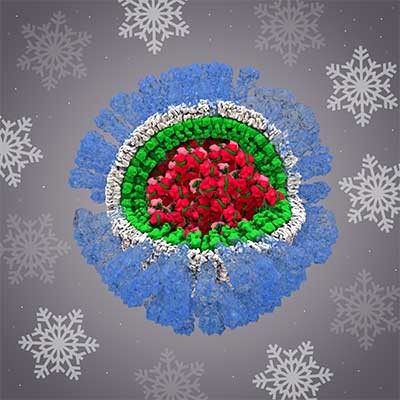
The H1N1 flu virus as a decorative holiday ornament of blue, white, green, and red, nestled in a grey backdrop with white snowflakes. Refer to text for description. Credit: Rommie Amaro, Jacob Durrant, Adam Gardner, and colleagues.
Ah, December—a month suffused with light-filled holidays, presents, parties . . . and the spread of colds and flu. This playful image uses a festive approach to the serious science of understanding and finding ways to combat the flu virus.
Continue Reading